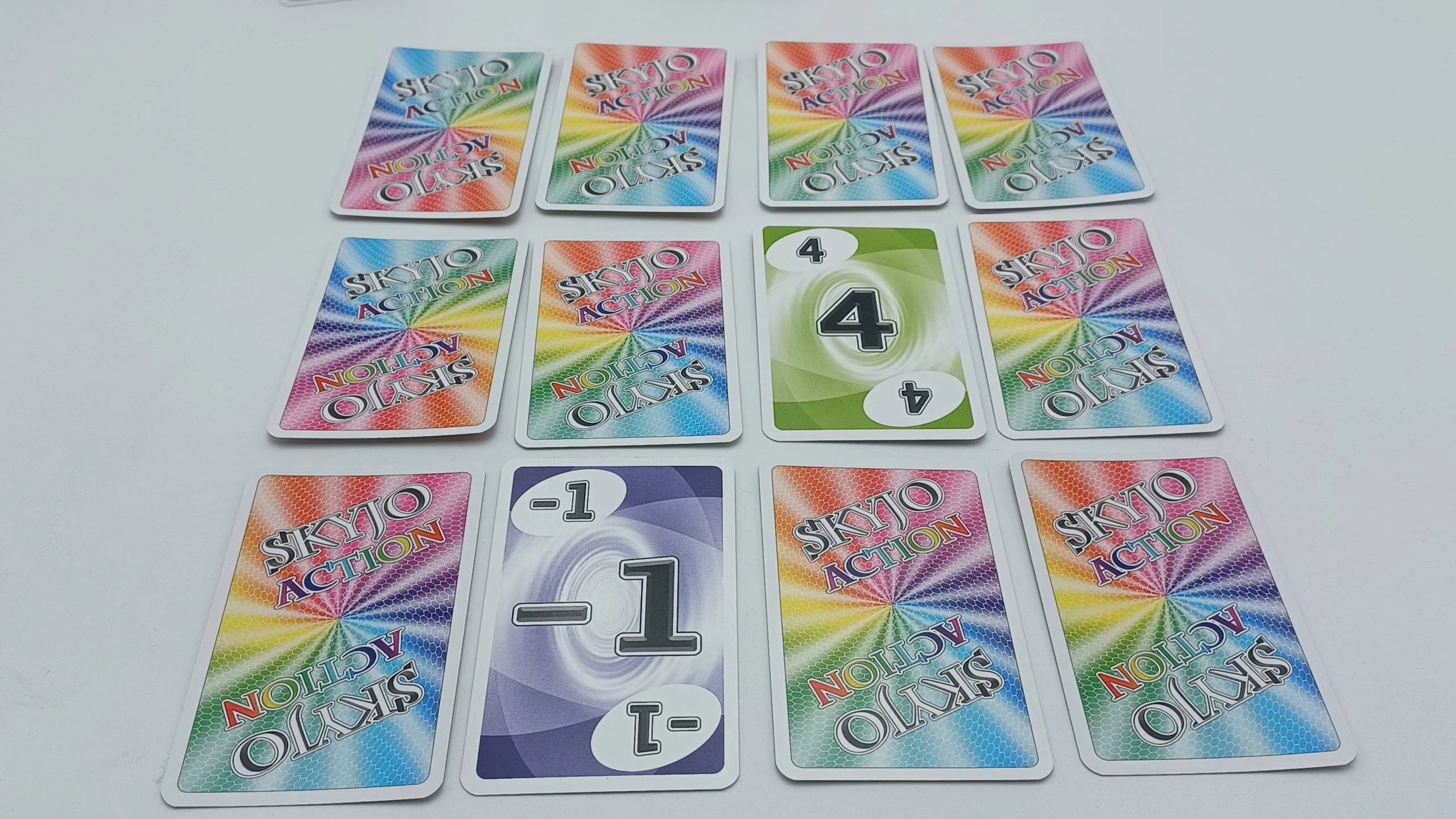
Tips and tactics to lower your score and win more often
The column removal rule is the most powerful mechanic in the game. When you have two matching cards in a column, prioritize finding the third. A removed column of 12s saves 36 points — more than most players score in a round.
The top of the discard pile is free information. If it's a -2 or -1 and you have a high card in that position, take it immediately. Many players reflexively draw from the deck when the discard pile has exactly what they need.
Memorize the positions of your face-down cards as you flip them. When you draw a card you don't want to keep, discard it and flip a face-down card — but only if you have a rough idea of what's there. Flipping a 12 when you expected a low card is a common mistake.
Don't end the round just because you've flipped all your cards. Estimate your total first. If you have unknown face-down cards, assume they average around 4–5 points each. Only end the round when you're confident you have the lowest score.
Cards 10, 11, and 12 are the most damaging. When you draw a low card (0, -1, -2), swap it with your highest visible card. Don't hold onto a drawn card hoping for a better opportunity — take the guaranteed improvement.
Keep a rough mental tally of opponents' visible cards. If someone is close to ending the round, start prioritizing speed over optimization. If an opponent has two matching cards in a column, don't give them the third by discarding it.
Knowing the deck composition helps you make better decisions.
| Card Value | Count | % of Deck | Takeaway |
|---|---|---|---|
| -2 | 5 | 3.3% | Rare — always keep if drawn |
| -1 | 10 | 6.7% | Excellent — swap with any card 4+ |
| 0 | 15 | 10% | Good — swap with any card 5+ |
| 1–9 | 10 each (90 total) | 60% | Most of the deck — average draw is ~5 |
| 10–12 | 10 each (30 total) | 20% | Replace immediately when possible |
The average card value in the deck is approximately 3.8. Any face-down card you haven't seen is likely worth around 4 points. Use this as your baseline when estimating your total score.
Ending the round at the wrong time is the most costly mistake in SKYJO. The doubling penalty can turn a good round into a disaster.
Action cards add a layer of complexity. Here's how to use each one effectively.
Use it to move a high card from your grid to an opponent's, or steal a low card. Best used when you can see a -2 or 0 in an opponent's grid.
Peek at 3 of your own face-down cards before deciding whether to end the round. One of the most powerful cards — eliminates uncertainty at a critical moment.
Hold onto Defense cards when you're in the lead. Use them to block Swap or Swap with Player when an opponent tries to disrupt your low-score grid.
Forces all players to flip one face-down card. Best played when you're behind and opponents have high hidden cards. Risky if you have unknown high cards yourself.
Use star cards to complete columns. If you have two 7s in a column, a star card removes all three. Don't waste them as low-value replacements when a column opportunity exists.
Take any card from the discard pile. Powerful when a -2 was recently discarded. Watch the discard pile carefully — this card rewards attentive players.
Get SKYJO on Amazon and start playing today. Over 74,000 five-star reviews.
Buy SKYJO on Amazon — $19.95 →
Work through Action final turns, matching rows, crossing-line disputes, star bonuses and unused actions with clear examples and honest rulebook boundaries.
Learn when Reactivation can recover an action immediately, how Double Move creates consecutive choices, and why a saved combo can fail at the final round.
Explore what SKYJO AI and mathematical research really show about luck and skill, with worked choices, column examples and clear limits on win-rate claims.
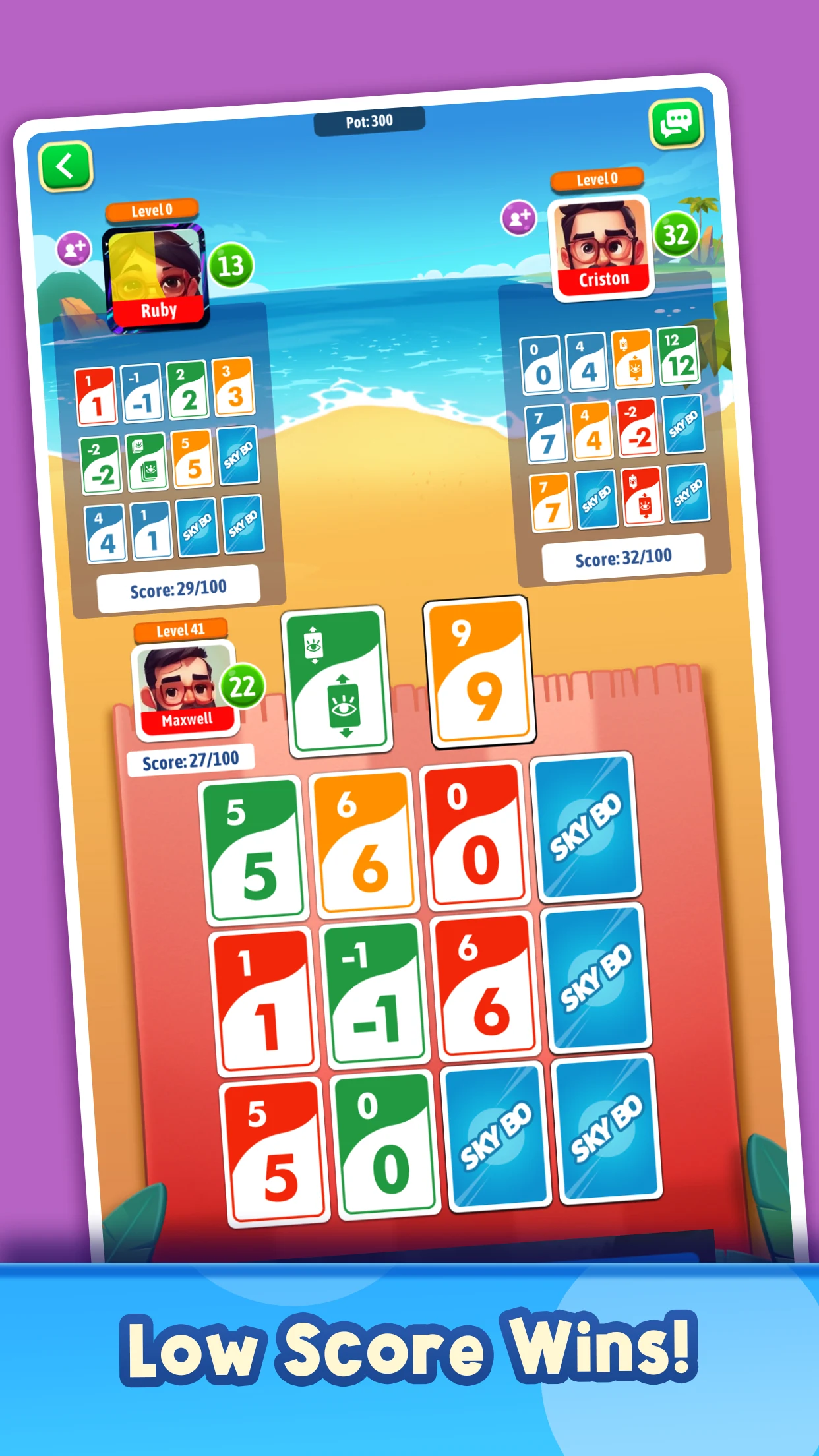
Identify the Sky-Jo Android app, understand dated complaints, protect your account, and report connection, coin or matchmaking problems with useful evidence.
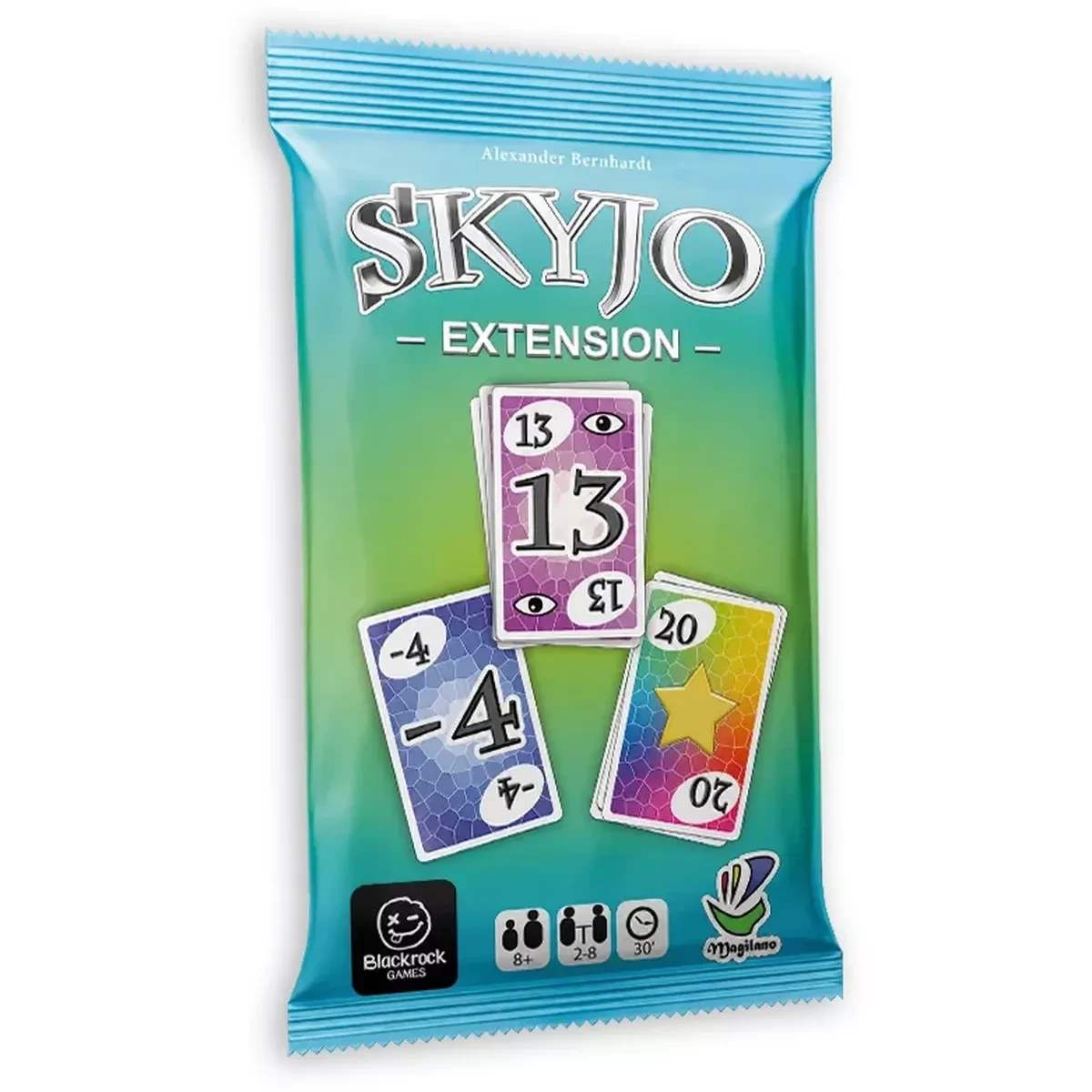
SKYJO's 2026 expansion adds information and risk to Classic with ten 13s, one minus-four and three stars. Learn the printed card effects, compare practical scoring examples, distinguish the pack from Action, and check French edition and retailer details before buying.
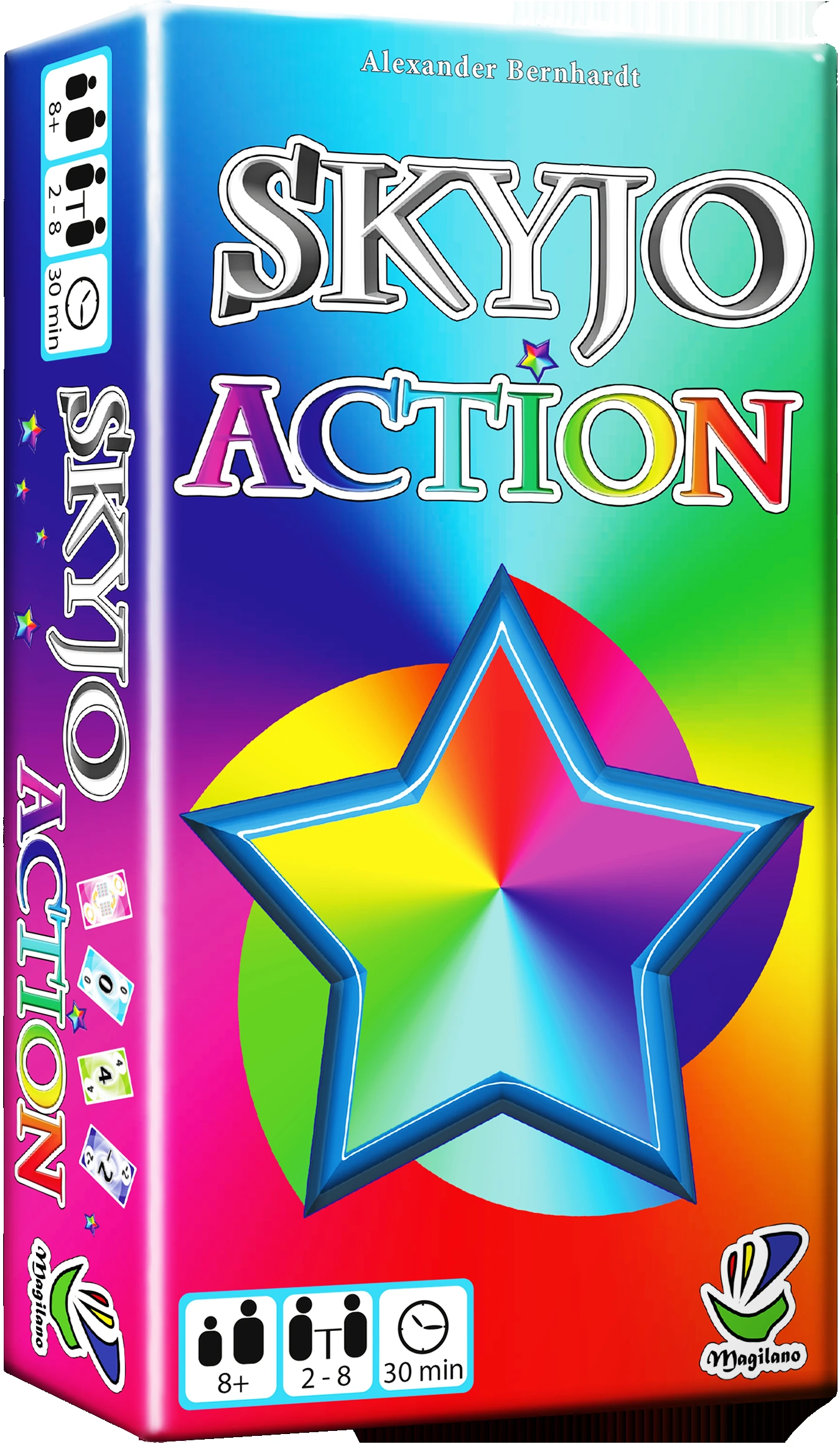
An Action-specific buying guide to publisher and specialist-store offers, local collection, Walmart and Target edition checks, and the true delivered cost.